


THE COUNTRIES
Myanmar and Bangladesh
ABOUT THE ANIMAL
Common Name: The Arakan Forest Turtle
Scientific Name: Heosemys depressa
ABOUT THE ARAKAN FOREST TURTLE
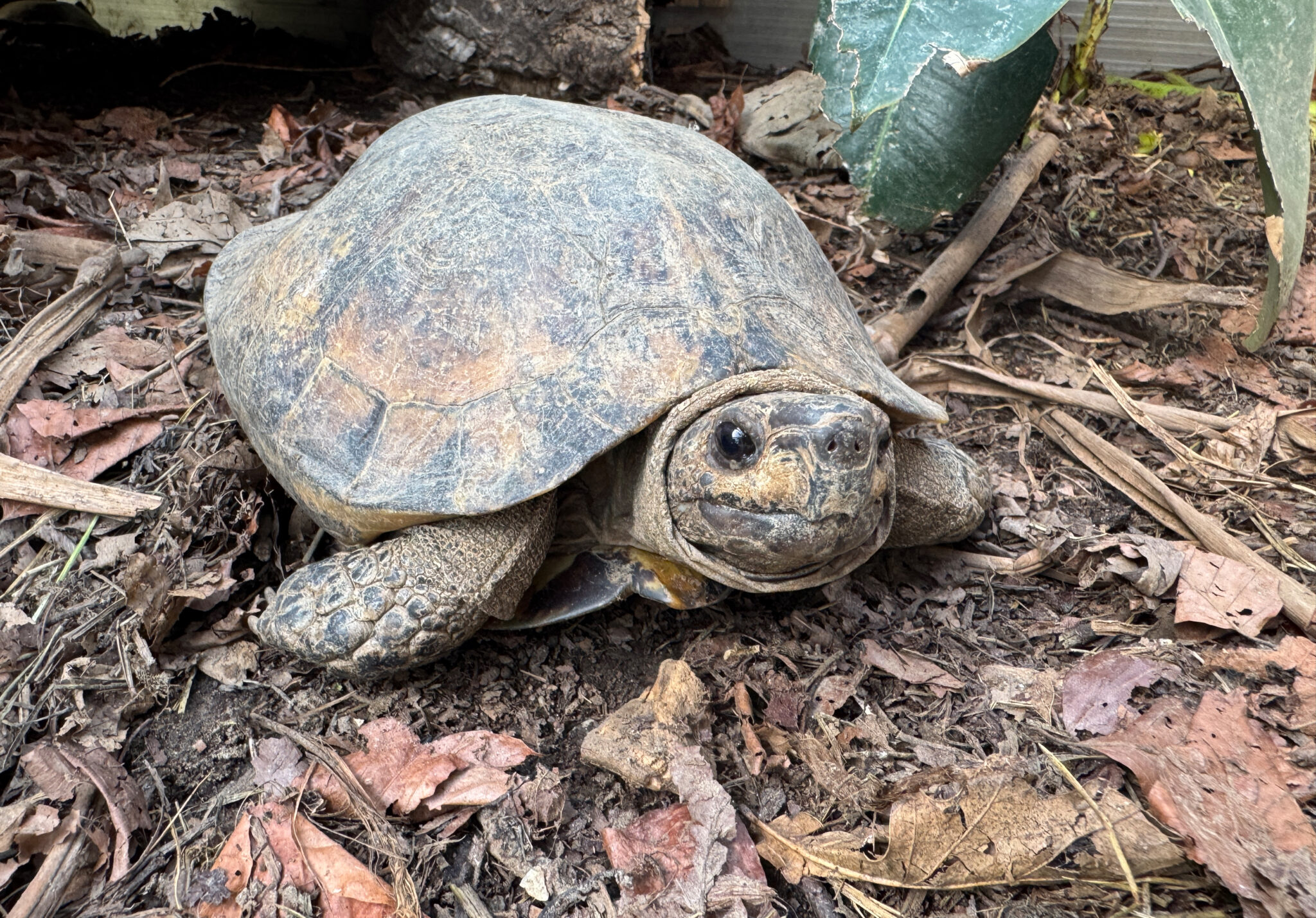
The Arakan Forest Turtle (Heosemys depressa) is one of the world’s rarest turtles. Native to the dense forests of western Myanmar and a small area of Bangladesh, this Critically Endangered species is so elusive that it remained one of the greatest mysteries in turtle conservation for more than a century.
First described in 1875, the Arakan Forest Turtle was known only from a single scientific illustration and a handful of museum specimens (Iverson and McCord 1997). For decades, no living individuals were documented, and the species was widely believed to be extinct.
Then, in 1994, two turtles were discovered in a food market in China. Recognizing their importance, the animals were sent to renowned herpetologist Bill McCord, confirming that the species had survived. Even so, virtually nothing was known about its natural history, and it was not until 2009 that wild populations were officially rediscovered in Myanmar.
The Arakan Forest Turtle inhabits remote tropical forests that are extremely difficult to access, making field research challenging. Unlike many freshwater turtles, this species spends much of its life on land, sheltering in burrows beneath the forest floor during the long dry season and becoming active only during the rainy months. Because they spend so little time above ground, they are rarely encountered in the wild.
Despite its rediscovery, the Arakan Forest Turtle remains under severe threat. Its small remaining population is vulnerable to habitat loss from deforestation and agricultural expansion, while illegal collection for the wildlife trade and local consumption continues to put additional pressure on the species. Because the turtles spend much of the year hidden underground and occur in such a limited, remote range, even small population declines can have devastating consequences. Protecting the remaining wild populations while establishing genetically healthy assurance colonies is essential to preventing this remarkable species from disappearing forever.
As we continue caring for this remarkable species, we are discovering just how intelligent and athletic they are. They carefully investigate new environments, assess potential escape routes, and quickly learn to distinguish between individual caretakers. Their powerful limbs and exceptionally large claws make them excellent climbers, requiring specially designed secure enclosures to keep them safe. Despite decades of conservation work, much about their behavior and ecology remains unknown, making every observation an opportunity to learn more about one of the world’s most enigmatic turtles.
HOW THE ARAKAN FOREST TURTLE CAME TO TURTLE ISLAND
In 2017, one male and two female Arakan Forest Turtles were surrendered to an animal shelter in Hong Kong by a private owner who could no longer care for them. The turtles were believed to have originally come from the illegal wildlife trade, likely purchased from a meat market where this highly threatened species is occasionally sold.
Recognizing their extraordinary conservation value, the shelter transferred the turtles to Kadoorie Farm and Botanic Garden, a leading conservation organization. During their care, the turtles successfully reproduced, producing a female hatchling that would later become part of Turtle Island’s breeding program.
Knowing Turtle Island’s founder Peter Praschag’s lifelong dedication to endangered Asian turtles, Kadoorie Farm contacted him to ask whether Turtle Island could provide a permanent home for the group. Although export permission was obtained quickly, importing the turtles into Austria proved far more difficult. For seven years, the transfer was delayed by complex international permitting requirements, requiring the export permit to be renewed multiple times while conservation partners worked toward a solution.
Finally, in February 2025, the transfer was completed through collaboration with another European Union country. Turtle Island welcomed one male and three females, an important milestone in the global conservation of this exceptionally rare species.
You are currently viewing a placeholder content from YouTube. To access the actual content, click the button below. Please note that doing so will share data with third-party providers.
More InformationWHY THIS POPULATION MATTERS
Today, Turtle Island is home to the largest breeding group of Arakan Forest Turtles in the world.
The newly arrived turtles joined animals already living at Turtle Island, including two males and one female on a breeding loan from Allwetterzoo Münster in Germany, and another donated male. With the arrival of the additional animals in 2025, our colony now consists of eleven adult turtles—five males and six females.
This population is especially valuable because most of the adults are wild founders rather than closely related captive-bred animals. Their genetic diversity provides a much stronger foundation for a long-term conservation breeding program and increases the likelihood of maintaining a healthy, self-sustaining assurance population.
For a species as rare as the Arakan Forest Turtle, every genetically valuable individual plays an important role in preventing extinction.
ONE TURTLES JOURNEY: MEET HAROLD U HLA!
Every turtle at Turtle Island has a story, but few have endured as much as Harold U Hla.
His name honors both his origins and his remarkable age. U Hla is a traditional name commonly given to older men in Myanmar’s Arakan (Rakhine) region, where this species is native. Hla means “handsome” in Burmese, making Harold U Hla a fitting name for this gentle old survivor.
Confiscated from the illegal wildlife trade in Hong Kong, this elderly male Arakan Forest Turtle has spent years moving from one place to another in search of a permanent home. After receiving care at Allwetter Zoo Münster in Germany, he finally completed his journey when he arrived at Turtle Island, where he will spend the rest of his life surrounded by others of his own species.
The hardships of his past are still visible. Harold has only two and a half legs, and local characters carved into his shell serve as a permanent reminder of the cruelty he once endured. Yet despite everything he has been through, he remains a gentle, curious, and trusting turtle who has quickly become a favorite among the Turtle Island team.
Because of his injuries and advanced age, Harold is unlikely to breed naturally. However, his story is not over. His genetics remain incredibly valuable, and in the future, he may become a candidate for assisted reproductive techniques, such as artificial insemination, helping preserve genetic diversity within the conservation breeding program.
For now, Harold reminds us that conservation is about more than saving species, it is also about giving individual animals a second chance. After a lifetime of hardship, he has finally found a safe place to call home.
OUR CONSERVATION EFFORTS
Turtle Island is one of only a handful of institutions worldwide actively working with the Arakan Forest Turtle. Our conservation efforts focus on establishing a secure assurance colony while advancing our understanding of this poorly known species.
Each turtle receives specialized veterinary care and is housed in carefully designed forest enclosures that replicate important aspects of its natural habitat. Because these turtles are exceptionally strong, agile climbers and skilled escape artists, their habitats require additional safety measures to ensure their welfare and security.
Beyond breeding, every day spent caring for these turtles provides valuable insights into their biology and behavior. We continue to learn about their seasonal activity patterns, social behavior, husbandry requirements, and reproductive biology—knowledge that will help improve conservation efforts both in captivity and, ultimately, in the wild.
FUTURE PLANS
Our long-term goal is to establish a thriving, genetically diverse assurance population that can serve as a safeguard against extinction.
As our understanding of the species continues to grow, we hope to successfully breed future generations while working alongside international conservation partners to protect the remaining wild populations and their forest habitat.
Ultimately, we envision a future in which captive-bred Arakan Forest Turtles can be returned to secure, well-protected habitats within their native range. Reintroduction will only be considered once suitable habitat has been protected, threats such as illegal collection have been sufficiently addressed, and long-term monitoring programs are in place. Until then, Turtle Island’s breeding colony will play a vital role in ensuring this extraordinary species does not disappear forever.
BECOME AN ARAKAN FOREST TURTLE GUARDIAN THROUGH OUR ADOPTION PROGRAM
By symbolically adopting an Arakan Forest Turtle, you help provide the specialized care these remarkable turtles need while supporting critical conservation efforts. Your adoption helps fund nutritious food, expert veterinary and husbandry care, conservation breeding programs, and other essential work to protect this species.
Visit our Arakan Forest Turtle Adoption Program page to learn more about becoming an Arakan Forest Turtle Guardian and supporting the conservation of this extraordinary species.
HELP US PROTECT ENDANGERED TURTLES AND TORTOISES
This project is just one part of Turtle Island’s mission to protect endangered turtles and tortoises worldwide. You can stay connected with our work, whether it’s following for updates on the Arakan Forest Turtle conservation breeding colony or learning about our other ongoing turtle conservation projects by subscribing to our newsletter.