


THE COUNTRY
USA
ABOUT THE ANIMAL
Common Name: The Bog Turtle
Scientific Name: Glyptemys muhlenbergii
ABOUT THE BOG TURTLE
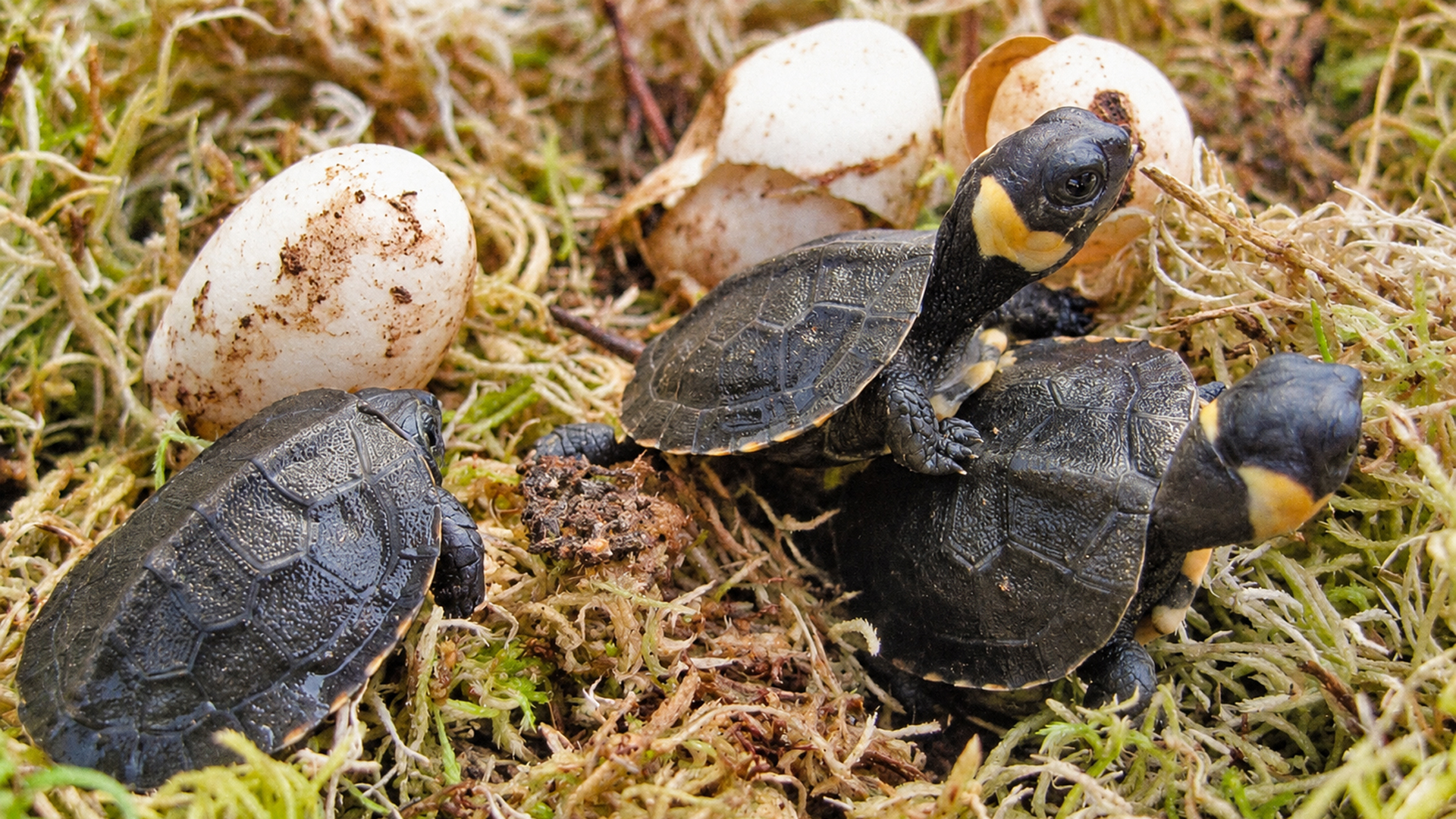
The Bog Turtle (Glyptemys muhlenbergii) is one of the smallest turtle species in the world and the smallest turtle species in North America, measuring only 3-4.5 inches (7.62-11.43 cm) fully grown. Unfortunately, this tiny turtle is classified as Critically Endangered by the IUCN. It is native to the United States and has two distinct populations. The northern population is found in Connecticut, Delaware, Maryland, Massachusetts, New Jersey, New York, and Pennsylvania, while the southern population occurs in Georgia, North Carolina, South Carolina, Tennessee, and Virginia.
Bog Turtles depend on specialized wetland habitats, particularly spring-fed freshwater marshes and bogs with shallow, slow-moving water, soft mud, and dense vegetation. These habitats are increasingly threatened by loss and fragmentation, including from residential and commercial development, agriculture, roads, and changes to wetlands. The species is also vulnerable to collection for the pet trade because of its small size and attractive coloration.
Despite their small size, Bog Turtles can live for many decades. Individuals in the wild have been documented at more than 60 years of age, demonstrating the remarkable longevity of this species.
REINER PRASCHAG’S LEGACY OF BOG TURTLE CONSERVATION

Reiner Praschag, one of the founders of Turtle Island and the father of Turtle Island co-founder Peter Praschag, dedicated more than 40 years to keeping and breeding Bog Turtles.
His long-term work provided a detailed record of the species’ behavior, growth, diet, reproduction, egg laying, preferred plants and substrates, seasonal activity, and other aspects of their biology.
His observations were published in Radiata in 2022 in an article titled “Glyptemys muhlenbergii: 40 Years of Experience with Keeping and Breeding compared to its Life in the Wild”.
Reiner’s dedication to Bog Turtles was both scientific and deeply personal. Because they were his favorite turtles, he wanted them close to him so that he could observe their behavior throughout the year.
At his home in Graz, Austria, he designed specialized enclosures to closely replicate the conditions of their natural habitat in New Jersey. Rather than keeping the turtles in conventional enclosures, he carefully recreated the features they depend on, including shallow water, deep mud, dense vegetation, and seasonal changes in temperature, sunlight, humidity, and substrate. One particular enclosure measured approximately 5.7 m², with about 3 m² devoted to water and a deep layer of mud.
This approach allowed Reiner to observe the turtles closely while providing them with opportunities to behave naturally. Over decades of breeding, Reiner documented 77 clutches containing 267 eggs from three founder females through 2020, providing a valuable record of Bog Turtle reproduction in human care. His work also highlighted how little is still known about this secretive species. In the wild, Bog Turtles spend much of their time concealed in mud and dense vegetation, making them difficult to observe and study. Reiner’s long-term observations in carefully designed enclosures provided an opportunity to document behaviors and reproductive patterns that can be difficult to observe in the wild.
OUR CONSERVATION EFFORTS
Turtle Island is one of only a handful of institutions worldwide actively working with the Bog Turtle. Our conservation efforts build upon the foundation established by Reiner Praschag and focus on maintaining and advancing our assurance colony of this Critically Endangered species.
Reiner’s breeding success continues to have an impact today. Although the original individuals from his breeding group have since passed away, their offspring remain part of Turtle Island’s assurance colony. These offspring are now reproducing, and we have already welcomed second and even third generation Bog Turtle hatchlings. This next generation represents an important milestone for our conservation program, and a continuation of the work Reiner began decades ago.
The knowledge gained from Reiner’s decades of experience continues to guide how we care for these turtles today. By providing conditions that reflect the species’ natural habitat, including appropriate substrate, vegetation, water, seasonal changes, and opportunities for natural behaviors, we aim not only to maintain healthy animals but also to continue learning about the species.
As the colony continues to grow, we will continue improving our husbandry and breeding efforts, expanding our knowledge of the species and producing more healthy offspring. Ultimately, we hope that the knowledge and animals maintained through this program can contribute to future conservation efforts, including the possibility of rewilding Bog Turtles within their native range.
A LEGACY OF LONG-TERM CONSERVATION
Reiner’s work with Bog Turtles demonstrates the value of long-term observation in conservation. Over more than four decades, he was able to document individual turtles across much of their lives, including growth, reproduction, behavior, and longevity. Some of the turtles he cared for lived for decades, with individuals reaching more than 40 years in his care.
Today, Turtle Island’s Bog Turtle program continues that legacy. By combining decades of husbandry experience with ongoing conservation work, we are working to ensure that this extraordinarily small and highly specialized turtle has a future.
HELP US PROTECT ENDANGERED TURTLES AND TORTOISES
This project is just one part of Turtle Island’s mission to protect endangered turtles and tortoises worldwide. You can stay connected with our work by following updates on the Bog Turtle conservation breeding colony or learning about our other ongoing turtle conservation projects by subscribing to our newsletter.